Violet’s Search for Finch at the Blue Hole
All the Bright PlacesViolet’s Search for Finch at the Blue Hole is the final, devastating turn in Violet Markey’s attempt to locate Theodore Finch after his disappearance. Reading the clues he left behind, she recognizes that his wanderings may have led him back to water; at the Blue Hole, she searches by diving repeatedly before accepting that he is dead. The search moves from interpretation to physical ordeal, and from the hope of bringing Theodore Finch home to the task of telling his mother that he cannot return.
The Clues in the Closet
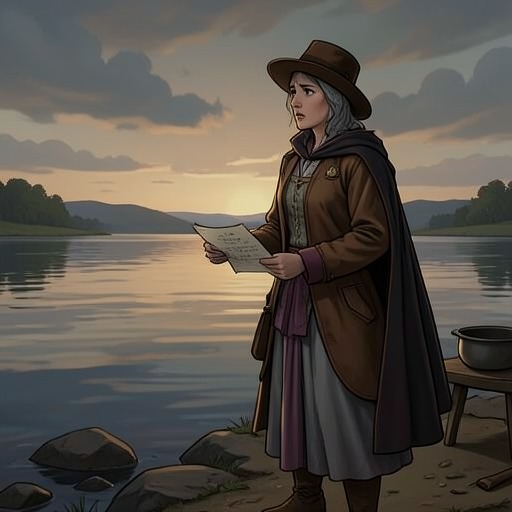
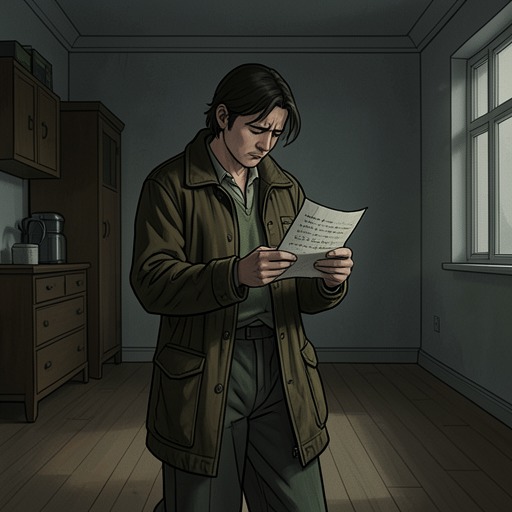
By the time Violet Markey comes downstairs, Kate Finch has gone out to look for Theodore Finch, leaving Decca Finch and Mrs. Finch at home. Violet asks Mrs. Finch to come upstairs, but the older woman hesitates on the landing, saying she does not think she can handle surprises. Violet tells her, “It’s a clue to where he is.” In Theodore Finch’s room, Mrs. Finch pauses over its blue-painted walls as though seeing them for the first time. Violet leads her to the closet, where the space is bare and much of its contents are gone, and points out the Post-its on the wall.
The first line connects Theodore Finch’s clues to a memory Mrs. Finch recognizes: the words recall what he said after the cardinal died. Violet rearranges words from the wall into the instruction, “Go to the waters if it suits thee there.” For her, this is not a precise address but a direction narrowing the search toward one of the places where she and Theodore Finch wandered. She sees the phrase alongside his writing in The Waves and a Facebook post made at 9:47 a.m., the same time as the Jovian-Plutonian hoax. Those clues make water seem significant, but do not identify which body of water he has chosen.
Violet lists several possibilities: the Bloomington Empire Quarry, Seven Pillars, the river in front of Bartlett High School, or any of about a hundred other places. Faced with the uncertainty, she nevertheless tells Mrs. Finch that she can give her directions and knows exactly where to look, adding that she has a pretty good idea where Theodore Finch might be. Mrs. Finch’s blank stare makes it unclear whether she can take in the explanation. Her hand tightens on Violet’s arm as she asks Violet to go, overcome by worry and unable to face the possibility of finding him herself. Her request is simple: “I just really need you to bring him home.”
Choosing to Go
Violet makes clear that she does not go for Mrs. Finch, Theodore Finch’s father, Kate Finch, or Decca Finch. She goes for herself. She believes she knows what she will find and fears that the outcome will be her fault: after speaking to her parents and betraying Theodore Finch’s trust, she thinks she pushed him out of the closet where he had been staying. She reasons that he would not have left if she had not forced him out, even as she tells herself that he would want her to be the one who came.
Before leaving, Violet calls her parents and says she will be home in a while because she has something to do. She hangs up while her father is still asking her a question, then drives faster than usual. She remembers the way without consulting the map and describes herself as eerily calm, as though someone else were driving. With the music off, her attention is fixed on reaching the place she has in mind. The contrast between the unresolved clues at home and the certainty of her journey gives the search its momentum: Violet cannot prove where Theodore Finch is, but she acts on the conviction that she must go to the water.
Searching the Blue Hole
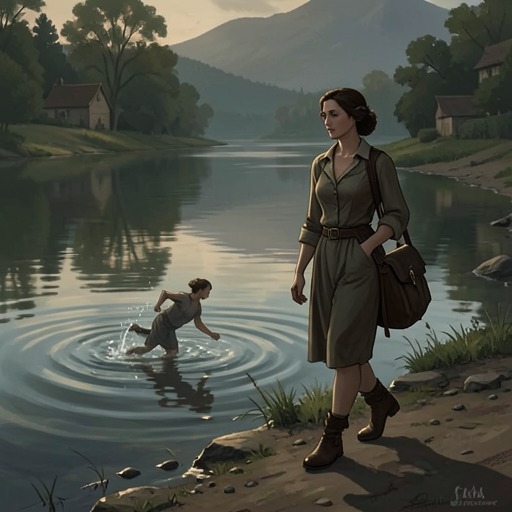
At the Blue Hole, Violet finds Theodore Finch’s clothes stacked neatly beside his shoes, coat, keys, and phone. She removes her own shoes and coat, leaves her keys and phone beside his belongings, climbs onto the rock ledge, and dives. The water is cold rather than warm and knocks the breath out of her. She treads water until she can breathe, then dives beneath the surface, where the water is strangely clear.
She swims down toward the bottom, but the water grows darker with depth, and she has to return to the surface for air. Violet dives again and again, going as deep as she dares before she runs out of breath, and swims back and forth from one end of the hole to the other. Each time she can stay under a little longer, but she cannot match Theodore Finch’s ability to hold his breath for minutes. The thought that he could do this becomes a painful recognition of the difference between his capacity and hers—and then of the fact that he is no longer alive to do it.
Even after she knows he is gone, Violet continues diving and swimming until she cannot go on. She crawls onto the bank exhausted, lungs heaving and hands shaking. As she calls 9-1-1, she tries to resist the word death by imagining that Theodore Finch is not nowhere, but has found another world. The sheriff for Vigo County arrives with the fire department and an ambulance. Wrapped in a blanket on the bank, Violet thinks about Theodore Finch, Sir Patrick Moore, black holes, blue holes, bottomless bodies of water, exploding stars, and event horizons—a place so dark that light cannot escape once it enters.
Identification and the Call Home
When rescuers bring Theodore Finch’s body up, Violet cannot recognize him in the swollen, bloated, blue form. She insists that it is not the person she knows and turns her head away. The sheriff says Theodore Finch’s parents must be called. Violet takes responsibility for making the call because Mrs. Finch asked her to come and find him. That promise has changed meaning: she can tell the family where he was, but she cannot bring him home alive.
Violet calls the line Theodore Finch’s family never uses. Mrs. Finch answers on the first ring, her voice at once hopeful and terrified. Violet tells her, “I found him. He was where I thought he would be. I’m so sorry.” As she speaks, Violet pinches the inside of her arm, making small red marks because she suddenly cannot feel anything. Mrs. Finch makes a low, guttural sound; Violet keeps repeating that she is sorry until the sheriff pries the phone from her hand. The call transfers the discovery from Violet’s private knowledge to the family’s grief, while her repeated apology shows how strongly she continues to connect Theodore Finch’s disappearance with her own actions.
The search ends without the rescue Mrs. Finch asked for. Violet’s efforts have nevertheless carried her through the full sequence of finding clues, choosing a destination, searching the water, and reporting what she has found. At the Blue Hole, the dark opening that had seemed to offer a possible hiding place becomes the site where she must acknowledge Theodore Finch’s death. Her remaining words turn toward the sky and toward the image of Theodore Finch as all colors at full brightness, holding onto a version of him that the body she has just seen cannot make recognizable.